The Offer Analyzer: How to Create Compelling Consulting Offers That Convert

Peter O'Donoghue
Consulting Growth Expert
Are your consulting offers falling flat? Do potential clients seem interested but never pull the trigger?
You might be making one of the three critical mistakes I see consultants make again and again.
The Three Big Problems With Most Consulting Offers
In my work with clients across various industries, I consistently see three major problems that prevent consulting offers from converting:
1. They're too large and amorphous. Many consultants position their services using vague, expansive language like "change management" or "digital transformation." These descriptions function more like job titles than actual offers. They're simply too broad for clients to grasp what exactly they're buying.
2. They aren't linked to known pain points. Even well-defined offers fail when they don't connect directly to problems the client recognizes as urgent. If clients don't see how your service addresses their specific challenges, why would they invest?
3. They lack commercial imperative. The final nail in the coffin is when your offer doesn't tie to a commercial outcome. Without a clear financial benefit, your service becomes a "nice to have" that's first on the chopping block when budgets tighten.
What You Need Instead
What you want instead is an offer that:
After all, foot in the door offers are useless if they keep you boxed in. The goal is to start a relationship that evolves into deeper work.
The Offer Analyzer Framework
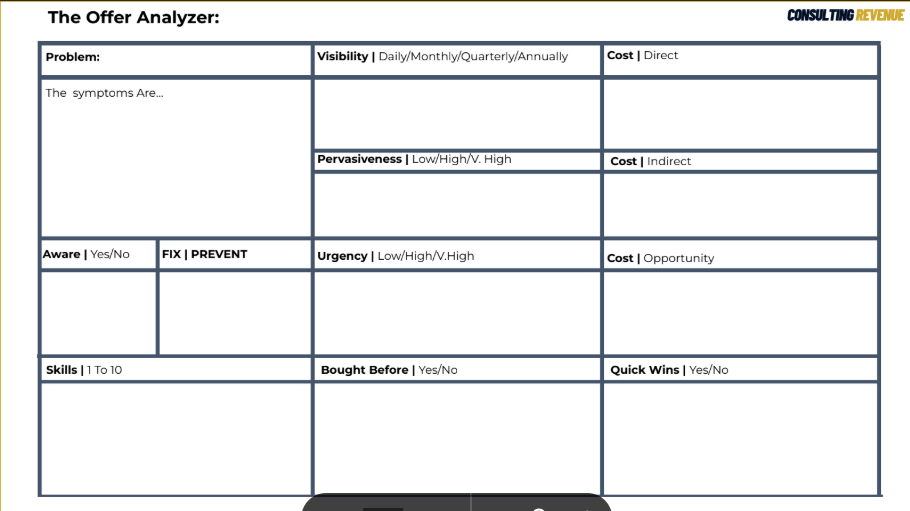
To help consultants create compelling offers, I've developed the Offer Analyzer framework. Here's how it works:
1. The Problem
First, get crystal clear on the problem your offer solves. What specific issue are you addressing?
2. The Symptoms
What are the visible symptoms of this problem that clients experience? This is critical. One client recently told me, "What clients think the symptoms are and what the root cause actually is are different."
My response: "That's fine, but if you want to get outside your intellectual box, remember that clients know the symptoms of their problems. If they understood the root cause, they wouldn't need you."
3. Visibility
How often does the organisation see this problem?
Want to implement this in your consultancy?
Book a free diagnostic to see where your revenue is hiding.
If it's February and you're trying to solve a problem related to Christmas parties, good luck getting attention. The pain of planning holiday events in September is forgotten by January. Ideally, your offer addresses issues with daily visibility and impact.
4. Cost to the Organization
As best as you can determine, what are the:
Bottom line: Can you quantify what this problem costs them?
5. Pervasiveness
How widespread is the problem within the organization?
6. Awareness
Are they aware of the problem? Do you need to educate them, or are they acutely aware already?
7. Fix vs. Prevent
Does your offer fix an existing problem or prevent a future one? People are generally more motivated to fix known, pressing problems than to prevent theoretical ones.
8. Urgency
How urgent is this problem for the client? This ties directly to the previous point.
9. Your Skill Level
On a scale of 1-10, what's your skill level in solving this problem? If you're a 9 or 10, great. If you're a 6 or 7, you can either upskill or bring in outside help.
10. Past Purchases
Has this company or industry bought something similar before?
Many consultants want to be innovative, offering something completely new. But here's the thing about innovation: It's like the fox theory. When something is new, it gets attention, like a fox noticing a bright pink bin. The fox approaches, examines it, maybe knocks it over, but then runs away scared because it doesn't know what will happen.
Similarly, innovative consulting offers often generate significant interest but don't convert to clients. Clients prefer buying something very similar to what they've purchased before. Position your offer as familiar but better.
11. Quick Wins
Can you provide quick wins with your delivery? Whether in a week, 12 weeks, or six months, can you guarantee specific, substantive results?
Putting It All Together
By analyzing your offers through this framework, you can identify which ones are most likely to resonate with clients and lead to sales. You can score each element to objectively compare different potential offers.
The strongest offers will have:
With these elements in place, your consulting offers transform from vague "nice-to-haves" into compelling solutions clients can't wait to buy.
If you'd like a copy of the Offer Analyzer framework you can get it from my resources - no opt in required.
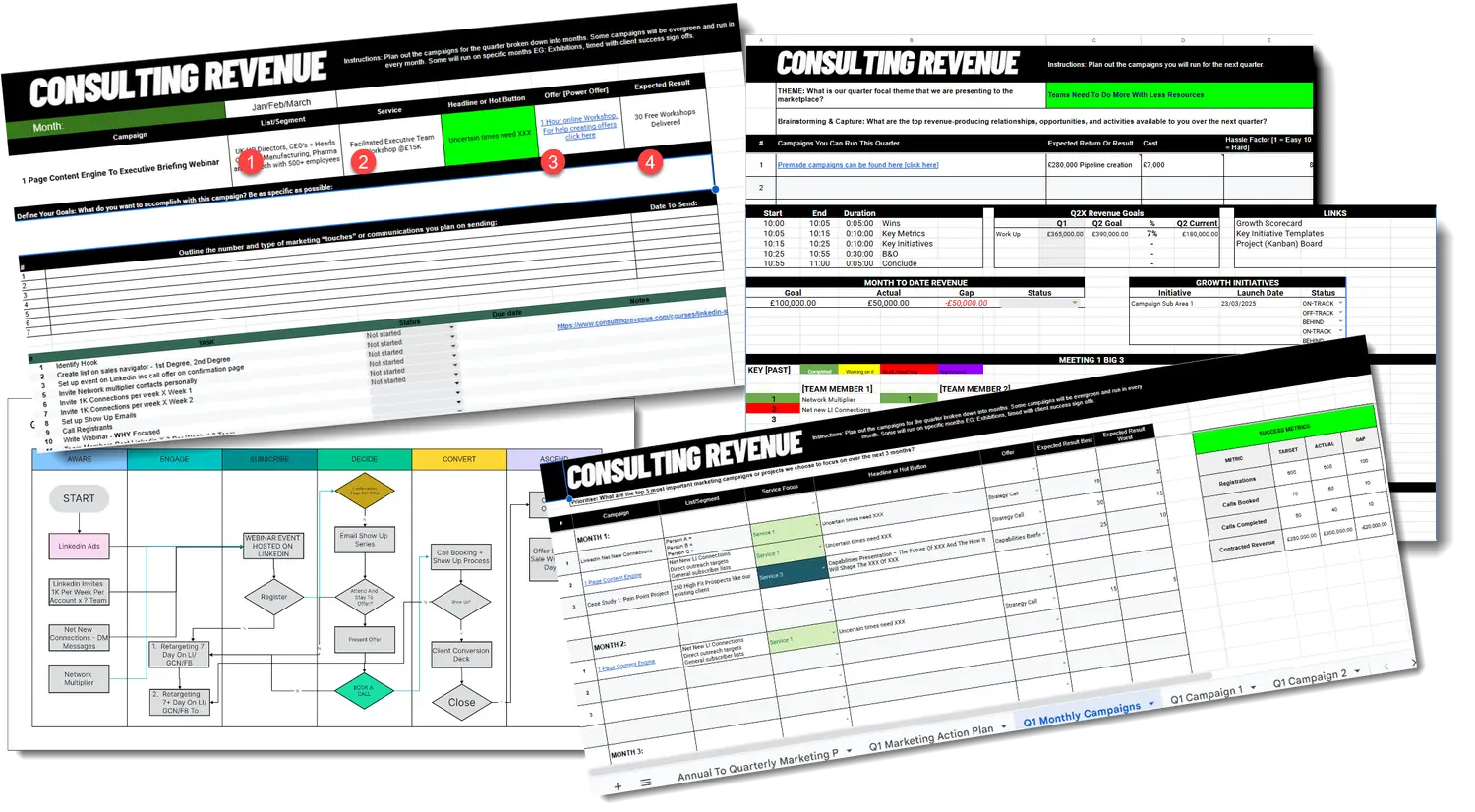
Build a BD System That Runs Without You
Download the Revenue Engine Builder. A strategic and tactical framework for building a repeatable, predictable business development system inside your consultancy.