How You Can Turn 1 Consulting Client into 10 Using The Bullseye Method

Peter O'Donoghue
Consulting Growth Expert
Success in consulting often feels like a rollercoaster. One month you're delivering exceptional results for a client, the next you're anxiously wondering where your next project will come from.
Sound familiar?
Let me share a recent conversation that might hit close to home.
I was speaking with the founder of a boutique ESG consultancy who had just wrapped up a transformative project in the manufacturing sector. When I asked him how many companies in his client's supply chain he'd approached about similar work, his response was telling:
"None."
Here's the thing: this isn't unusual.
Many experienced consultants sit on a goldmine of opportunities without realising it.
Your successful client projects aren't just achievements – they're keys that can unlock doors to dozens of new opportunities.
Why Most Business Development Efforts Fall Short
The traditional view of business development conjures images of cold calling and pushy sales tactics. It's no wonder many seasoned consultants avoid it like the plague.
But here's what we're missing:
Enter the Bullseye Method
The Bullseye Method is a systematic approach to leverage one successful client engagement into multiple new opportunities. Think of it as precision targeting rather than scattered shooting.
When to Use the Bullseye Method
The perfect time to implement this approach is when:
Why It Works
The Bullseye Method taps into several powerful psychological triggers:
Implementing the Bullseye Method: A Strategic Framework
Step 1: Document Your Success
First, answer these critical questions about a recent project you completed:
Want to implement this in your consultancy?
Book a free diagnostic to see where your revenue is hiding.
Step 2: Map Your Target Universe
Identify potential targets within these categories:
- Competitors of your successful client [if ethical]
Step 3: Execute Your Outreach
Don't overcomplicate this part. For each target company:
1. Identify 3-5 key decision-makers
2. Use your preferred outreach method (LinkedIn, email, phone)
3. Move quickly while your success story is fresh
4. Leverage tools like Apollo or Prospeo for contact information
Crafting Your Message
Here's a framework for effective outreach that maintains your professional integrity:
Email Template:
Subject: A question about [specific pain point] at [Company Name]
Hi [Name],
I don't know how relevant this is to you...
We recently completed a project with [Client Name] where we [specific result with numbers] which is on track to [specific projected outcome].
The specific purpose of this email is to explore if [pain point] is relevant to [Their Company].
Feel free to say No, but are you open to a brief conversation about how our approach might benefit [Their Company]?
Cheers,
[Your name]
And here's a filled in example:
Subject: question about staff churn at Pepsi…
Hi Jane, - I don't know how relevant this is to you…
We recently completed a project with Coke where we reduced their staff churn from 28% to 18% in the crucial first 3 months of new hires.
This is on track to save them £700k this and every future year. So the very specific purpose of this email is to find out how relevant the challenge of staff churn is to Pepsi.
Feel free to say no, but do you want to jump on a quick call to run through some ideas I have about how the specialist knowledge we developed could help Pepsi?
Peter
Key Principles for Success
1. Be Specific: Use concrete numbers and results
2. Stay Professional: Focus on value and insights
3. Move Quickly: Timing matters when leveraging recent successes
4. Follow Up: Create a systematic process for following through
Making It Work For You
Remember, this isn't about cold calling or aggressive sales tactics. It's about strategically sharing valuable insights and proven solutions with organisations that could benefit from your expertise.
The beauty of the Bullseye Method lies in its simplicity and focus. Instead of casting a wide net, you're leveraging existing success to create meaningful connections with highly qualified prospects.
Next Steps
1. Review your recent successful projects
2. Document specific, measurable results
3. Map out the ecosystem around your successful client
4. Craft your outreach message
5. Start with a small batch of highly targeted outreach
6. Refine and repeat
Remember: Your successful projects aren't just past achievements – they're the foundation for your next phase of growth. The Bullseye Method helps you leverage these successes systematically and professionally.
Final Thought
Business development doesn't have to feel uncomfortable or unprofessional. When done right, it's about connecting organisations facing specific challenges with proven solutions you've already developed. That's not just good business development – it's good business.
Start small, be systematic, and let your results speak for themselves. The opportunities are already in your orbit – you just need to reach out and grab them.
You now have 3 choices ahead of you:
DECISION #1: Do nothing. Surely you wouldn't do that if you've read this entire post about decisions, actions and leadership?
DECISION #2: Take bold decisive action. If you want personal help to shortcut your time to revenue on the things I discuss in this post then schedule a call with me. I'll work out your 'shoot for the moon' position and give you some level of clarity on a challenge you are facing or a goal you want to attain.
DECISION #3: Dip your toe in the water. Sometimes small steps provide momentum. Upgrade to a paid membership and get instant access to training courses, support, and the huge value of having me on your team.
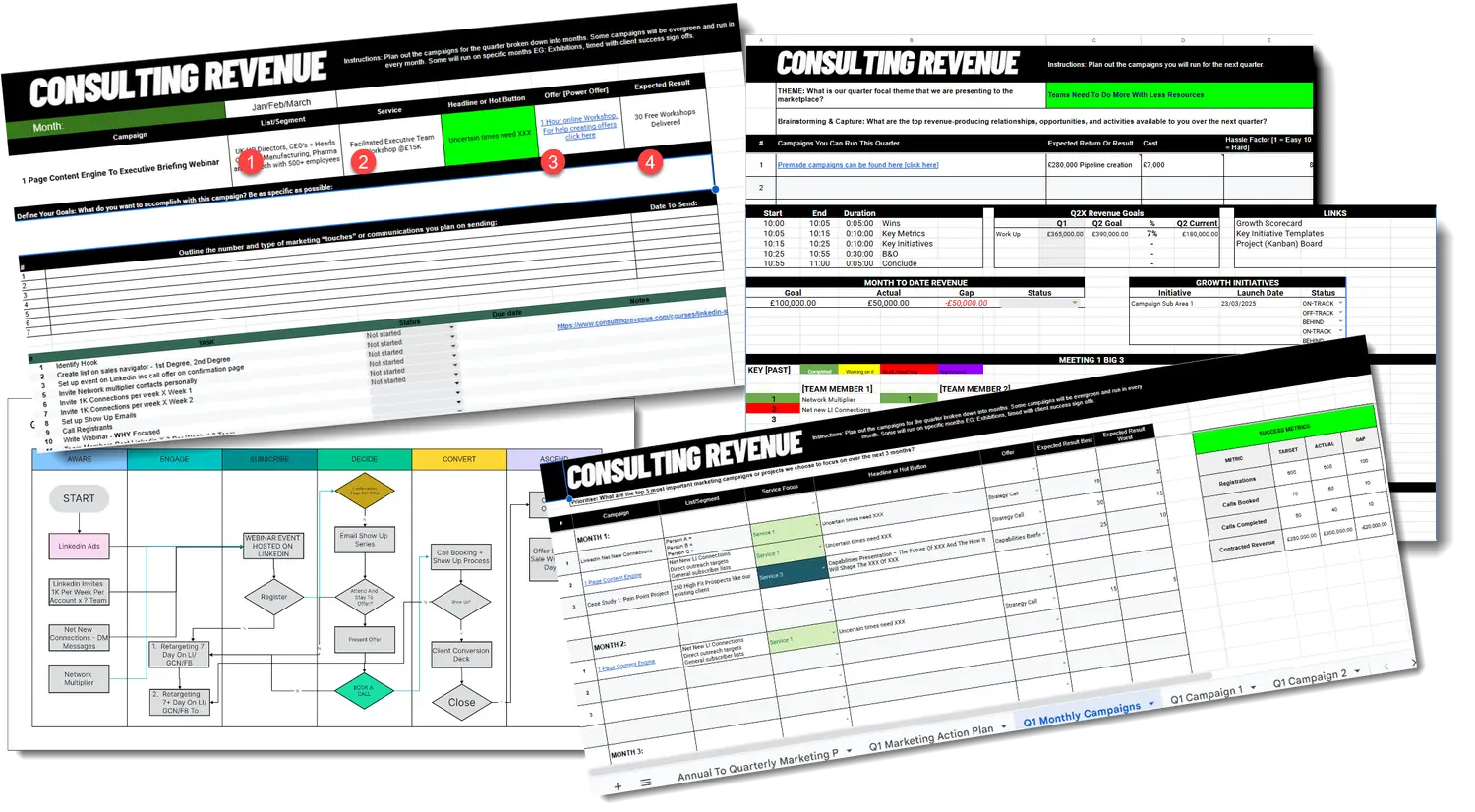
Build a BD System That Runs Without You
Download the Revenue Engine Builder. A strategic and tactical framework for building a repeatable, predictable business development system inside your consultancy.